
Finland has a population of 5.5 million people. That is smaller than London.
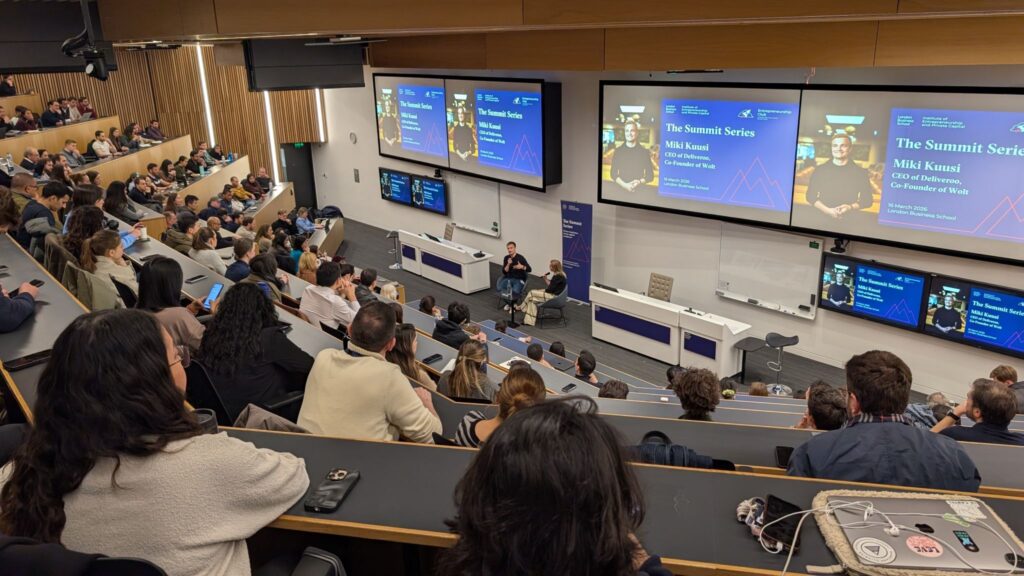
When Miki Kuusi founded Wolt in Helsinki, he wasn’t staring at a large addressable market. He was staring at a small one, with limited capital, no Silicon Valley network, and competitors who were raising $30 million rounds while he scraped together a fraction of that. Last Monday, sitting in a room at London Business School for The Summit Series — hosted by the LBS Entrepreneurship Club and the IEPC — I heard him describe what happened next: Wolt survived. Those well-funded competitors did not.
It’s the kind of story that sounds too neat in retrospect. But the lesson it carries is one that every MBA considering their next move should sit with: in business, the winner is rarely the one who starts with the most capital. It’s the one who builds the most resilient system.
The Power of Scarcity
Miki was matter-of-fact about it. Wolt had no choice but to be capital-efficient. Every operational decision was measured. Every market expansion had to earn its next step. That discipline — forged by constraint, not by choice — became the foundation of their competitive moat. When DoorDash eventually acquired Wolt, they weren’t just buying market share. They were buying an operating culture that had been stress-tested by scarcity.
This resonated deeply with my own background in e-commerce — an industry defined by razor-thin margins, brutal operational complexity, and a fundamental intolerance for waste. It’s why companies accustomed to the economics of social media advertising (where Meta, Google, or Tencent can print money on attention) consistently struggle when they try to move into e-commerce. The unit economics are different. The muscle memory required is different.
But there’s a flip side worth acknowledging. Founders forged in scarcity know exactly how to save money. What some of them never learn is how to spend it. In the ZIRP era — when zero interest rates flooded markets with cheap capital and “growth at all costs” became gospel — capital-efficient operators sometimes fell behind peers who were willing to burn aggressively to capture market share. In a winner-takes-most landscape, caution can be a liability.
The longer view, though, tends to vindicate them. When the tide eventually went out — and it always does — it was the operators who understood their unit economics, not the ones with the largest runway, who survived. Miki’s story is precisely that arc.
The MBA Paradox: Frameworks vs. The Trenches
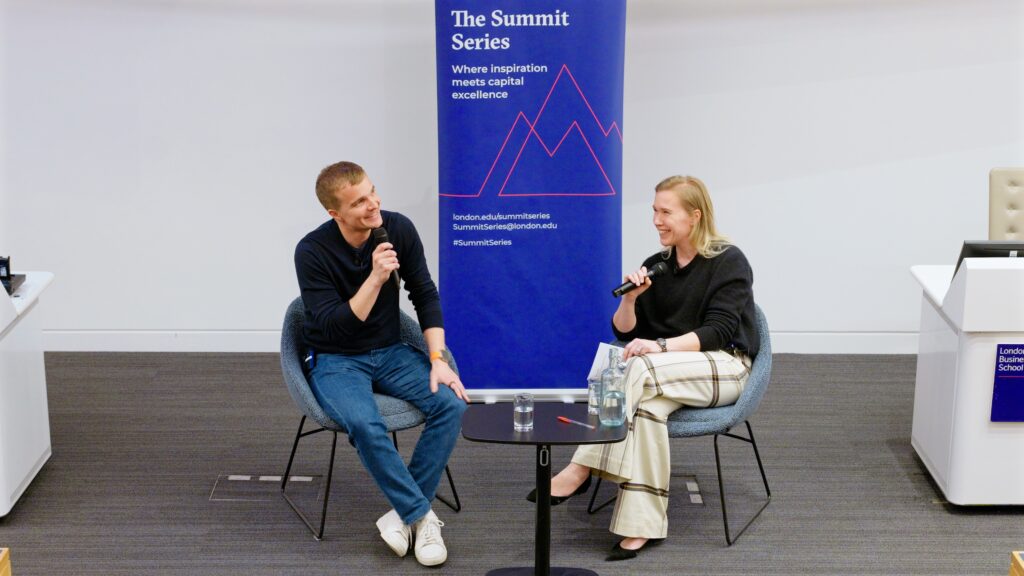
When asked how aspiring founders should actually learn to build companies, Miki’s advice was direct: don’t read startup books. Join a well-run company of 40 to 500 people. Surround yourself with people who are actually in the trenches. Let the work teach you what no case study can.
Sitting in that room as an MBA student — someone who has spent the past year deeply engaged with frameworks, models, and structured methodologies — I felt the provocation land with some force.
I want to offer a defence of frameworks, but also an honest reckoning with their limits.
Frameworks are not substitutes for experience. They are tools for memory, expression, and rapid comprehension. A well-constructed mental model lets you walk into an unfamiliar situation and ask better questions faster. It lets you communicate complex ideas with precision. The BCG matrix, Porter’s Five Forces, the jobs-to-be-done framework — none of these will tell you how to actually run an operations team under pressure. But they will help you think clearly when you’re trying to.
The ancient Chinese philosopher Wang Yangming articulated this tension five centuries ago with the concept of 知行合一 — the unity of knowledge and action. His argument was that knowledge divorced from action is incomplete; that understanding something fully requires living it. An MBA programme gives you the map. The scale-up gives you the territory. You need both, and in that order.
The synthesis, then, is not to abandon frameworks but to treat them as preparation for the experience — not a replacement for it.
Scaling Culture Without Scaling Bureaucracy
Miki also spoke about the structural challenge every growing company eventually confronts: how do you preserve the customer obsession and operational agility of a ten-person startup inside a thousand-person enterprise?
His answer drew on the culture of Supercell — the Finnish gaming company famous for operating through highly autonomous, tightly focused small teams they call “cells.” Wolt adapted this model: organising large operations into small units that move fast, own their outcomes, and stay relentlessly close to the customer.
I’d be cautious about calling this the definitive solution. Every organisation is different, and what works for a food delivery company operating across forty markets may not translate cleanly to other contexts. But as one model for maintaining agility at scale — and one that has been pressure-tested in the real world — it deserves serious attention.
For those of us who have studied organisational behaviour at LBS, it maps directly onto questions we’ve explored about bureaucratic drift, network structure, and the conditions under which large organisations actually innovate.
The Question I Wish He’d Answered
There was one thread I was hoping Miki would pull on that the format didn’t quite allow for.
We heard about how Wolt was built. We heard the strategic and operational lessons. What I would have found most valuable — and what I suspect many in the room were quietly curious about — was the personal story. How does a scrappy, hands-on startup founder mentally and behaviourally evolve into a CEO managing thousands of people and a major public company’s expectations? What did he have to give up? What did he have to learn to let go of?
That evolution — from operator to leader, from founder to executive — is one of the least-discussed and most consequential transitions in business. I hope we get to hear him speak to it directly one day.
What This Means for MBAs
Miki’s journey from Helsinki to London — from a scrappy regional food delivery app to leading Deliveroo’s operations — is not a template. But it contains principles that travel.
Constraint sharpens systems. Frameworks prepare you to learn, but only action teaches you. And the culture you build at ten people is the culture you’ll spend the rest of your company’s life either defending or dismantling.
For anyone here at LBS weighing their next move: don’t overlook the scale-ups. Not the household names, not the pre-IPO juggernauts — the 100-to-500 person companies that are figuring it out in real time. That is where the knowledge and the action meet. That is where the real education begins.
Richard Zhou is an MBA student at London Business School with a background in e-commerce and venture capital.