
An injury, not an idea, sparked the creation of Movmenta, setting in motion a four-year journey from London Business School to the Paris Marathon. Confronted with the invisible failure of running shoes, its founder Ofir Dagan, identified a critical gap in how athletes measure performance and risk. What began as a simple question evolved into a complex deep-tech venture spanning hardware, data science, and global partnerships. Along the way, credibility, failure, and persistence proved as vital as innovation. He shares his story of turning unseen problems into measurable solutions—and the realities no one warns founders about.
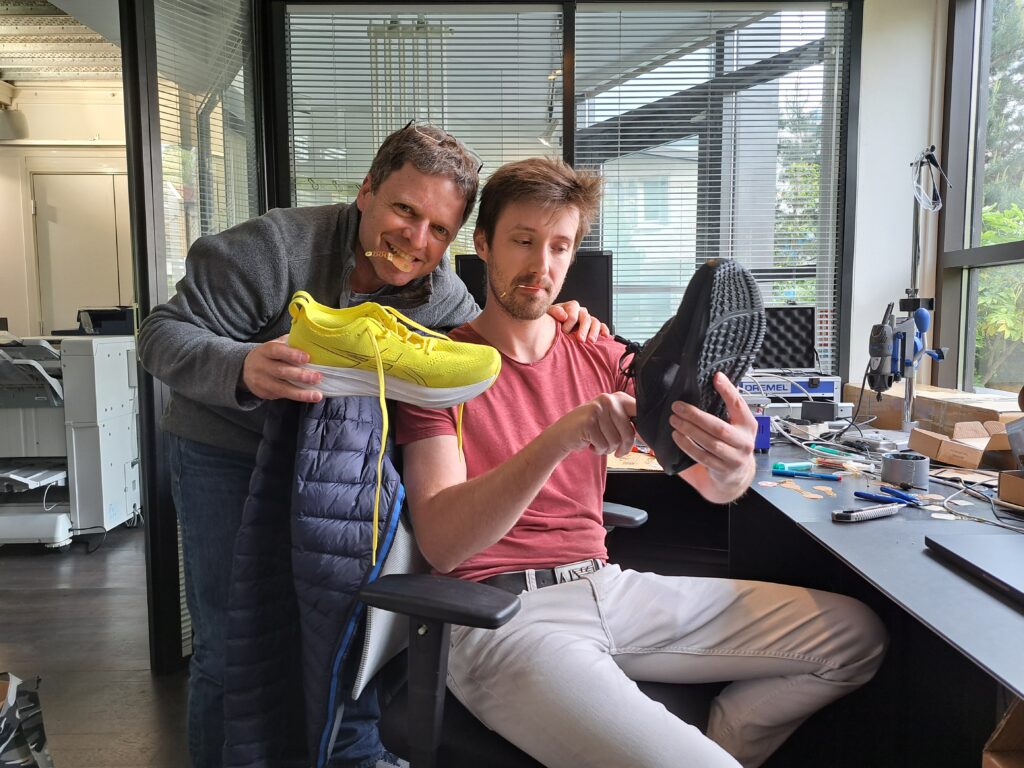
Most startups begin with an idea. Ours began with an injury. What followed was a four-year journey from an EMBA classroom at London Business School (LBS) to the start line of the Paris Marathon, and everything nobody warns you about in between.
The Question I Could Not Answer
I have been running long distances for decades. After most injuries, I found myself asking the same question: were my shoes still doing their job?
The answer was elusive. While I tracked pace, heart rate, cadence, and recovery, my equipment remained a black box. The midsole foam was quietly degrading, absorbing less impact, transferring more stress to my joints, and giving me no signal.
That gap between what we measure and what we should be measuring became the seed of a company. But it took a business school, a chance introduction, and a great deal of failure before that seed became anything real. This brings me to the crucial early relationships that shaped our direction.
Meeting Your Co-Founder Is Only the Beginning
I met Xavier Segri in the EMBA programme at London Business School. We had complementary backgrounds, shared frustration with sports technology, and the optimism that comes from being both exhausted and intellectually stimulated.
What we did not have was a clear path from insight to product.
Jeff Skinner, a central figure in the LBS entrepreneurship community, made an introduction that changed the trajectory of the company. Through Jeff, we met Joe Foster, the founder of Reebok, at the school. That meeting, which would not have happened outside the LBS ecosystem, was one of the pivotal moments in our early journey. Joe understood the problem immediately. He recognised the commercial opportunity. And he became a supporter and shareholder.
I tell this story not to name-drop but because it illustrates something important: in deep tech, credibility is a currency. The access that LBS provided, through the Incubator Programme, through The Entrepreneurship Lab, through introductions like that one, shortened the time between having an idea and being taken seriously by people who matter.
The Mistake I Made Most Often: Underestimating Complexity
Building hardware is hard…
We initially thought the core of our product was just the sensor. Our concept was a reliable, battery-free sensor that could be placed inside a shoe sole and activated with a smartphone scan. This would let runners access real-time information about their shoes. But this was only part of the solution.
What we actually had was just one component. The complete product required interpreting the sensor’s data: matching shoe cushioning levels with a runner’s body weight, running frequency, surface, and usage across multiple shoes. Only then could we deliver information that a runner could use to make decisions about their footwear.
Hardware (the physical devices), software (the code and programs), data science (the analysis and use of data), manufacturing integration (combining production processes), brand partnership (collaborations with other companies), and regulatory compliance (meeting legal requirements) are each their own discipline. Each of them surfaced problems we had not anticipated. And each of them took longer than we had planned.
The instinct, especially when you are burning through runway, is to accelerate. What I learned, often the hard way, is that the correct response to complexity is not speed. It is sequencing. Knowing which problem to solve first, and which ones to accept as unresolved for now, is a skill that no textbook teaches well.
What Deep Tech Fundraising Actually Looks Like
Consumer software investors understand metrics quickly. Deep tech is different.
When we were fundraising, we were often explaining the problem before we could explain the solution. That is a long conversation to have with someone who is evaluating dozens of opportunities simultaneously. The instinct to compress the pitch, to skip the physics and get to the market size, is understandable. It is also a mistake.
The investors who believed in Movmenta took the time to understand what we were building and why it was difficult. In deep tech, difficulty is the moat; if it were easy, someone would have done it already.
I also learned that credibility compounds. Each proof point, whether that was winning first place at ISPO Munich BrandNew in 2023, securing a strategic partnership with a global speciality materials company, or signing a co-development agreement with a major running brand, made the next conversation easier. You do not build trust in a single pitch. You build it incrementally, with evidence.
The Partnership Lesson: Alignment Before Agreement
I will be honest about something that took longer than it should have to learn.
When you are a small company pursuing a large commercial partner, the temptation is to say yes to everything. The contract arrives. It is detailed. It contains provisions you were not expecting. And you are so focused on closing the deal that you underweight the importance of ensuring genuine alignment on the things that matter most.
The time to negotiate is before you need the relationship. A contract is not the end of a negotiation, but the beginning of working together. The terms you accept today shape your future collaboration. Invest in legal counsel and tough conversations upfront; it’s far cheaper than fixing misalignment later.
April 2026: The Paris Marathon and What It Represents
In April 2026, KIPRUN, Decathlon’s dedicated running brand, announced a new smart shoe at the Paris Marathon. It is the first running shoe in the world capable of measuring its own cushioning wear. It is built on Movmenta’s technology.
I am proud of that. But what I am prouder of is that it exists at all.
Four years ago, we were two people at LBS with a theory about why runners get injured and a conviction that there had to be a better way to understand what was happening inside a shoe. Today, that theory is embedded in a commercial product that will reach consumers later this year.
The journey between those two moments was not smooth. There were stretches where progress felt invisible. There were moments where the technical barriers seemed insurmountable, where the fundraising felt like shouting into a void, where the right partnership was months away from materialising but felt years away.
What kept us moving was the community that formed around us at LB, founders who faced similar walls, mentors who offered perspective without sugarcoating difficulty, and the discipline to keep long-term objectives in focus when the short-term was uncertain.
What I Would Tell a Founder Starting Today
- First: your co-founder is your most important early decision. Not the idea, not the market, not the funding. The person you will be in the room with when things go wrong. Choose carefully, and then invest in the relationship as deliberately as you invest in the product.
- Second: evidence is everything in deep tech. Build proof points, however small, as early as possible. A working prototype beats a polished deck. A letter of intent beats a verbal commitment. A paid pilot beats a trial. The compounding effect of credible evidence is extraordinary.
- Third: the ecosystem around your institution is not a support structure for after you leave. It is a tool you can use while you are there. Use Jeff. Use Jo. Use the Incubator. Use the network. The relationships you build in that environment are not peripheral to the journey. For us, they were central to it.
Lessons form our failures
Throughout the Movmenta journey, the most significant failures I experienced were in product development and market traction.
Our initial prototypes failed after only ten miles of running, far short of our goal of over a thousand miles. For context, a 1.5-gram sensor must withstand up to 400 kg of impact per step, as running can generate forces 2.5 to 3.5 times the runner’s body weight. Each sensor must survive at least half a million impacts during the life of a shoe, or one million impacts for a pair.
Our technology repeatedly failed in field tests. We completed over seventy iterations before developing a sensor that could withstand real-world running conditions, remain battery-free, and weigh less than two grams. Each version provided insights into materials, adhesion, and the physics of repeated impact. There were no shortcuts; we had to build, fail, learn, and rebuild. It took years to achieve a reliable product, which continues to be improved.
On the business side, we struggled with credibility. As a small company with limited resources, no reputation, and no intellectual property, we attempted to introduce a new technology to major footwear brands, many of which were public companies unfamiliar with us. Despite our product’s strengths, gaining access was challenging. The uniqueness of our solution was difficult to convey to decision-makers who lacked a frame of reference for Movmenta.
Our breakthrough came when we partnered with Arkema, a leader in materials science with strong industry relationships. Their involvement as shareholders and global sales representatives provided us with credibility and access we could not have achieved on our own.
These failures taught me a consistent lesson: be smart, not just right; be creative and bold. When the direct path is blocked, persist through iteration or find a more effective alternative. Above all, remain consistent and determined. If you face similar challenges, continue moving forward by refining your approach or seeking creative partnerships to unlock new opportunities.
Conclusion
Someone once asked me whether I would have started Movmenta without LBS.
I think I would have started something. Whether it would have found the same partners, the same investors, the same credibility at the right moments, I genuinely do not know.
What I do know is that the school did not simply give us a qualification. It gave us a room to think in, a network to draw on, and a set of encounters that shaped the company in ways I still notice.
The invisible things, it turns out, are worth measuring. That is true of shoe cushioning. And it is true of the environments that shape entrepreneurs.
About the Author:
Ofir Dagan is Co-Founder and CEO of Movmenta, a Franco-British deep-tech company developing embedded sensor intelligence for footwear. Movmenta won first place in the Sports Technology and Platforms category at ISPO Munich BrandNew 2023. Ofir completed his Executive MBA at London Business School (EMBA 2022), and continues to contribute to the school as an affiliate lecturer, teaching Mastering Digital Transformation.